•
2 min read
Dynamic career paths: see how your employees upskill

Judith
Product Manager
Careers don't move up a ladder, they move across a network of skills. Talentguide's career overview shows what each employee has, how well they fit their current role, and which moves are actually within reach, with the exact skill gaps to close first.
Most companies claim to offer career growth. What they actually offer is a static ladder and unclear expectations for employees how they can grow in their careers.
What we believe in
Companies should be structured around:
Skills instead of roles
Subskills (tasks, tools, knowledge, languages...) instead of vague competencies
Additionally, a career path is not a ladder but a network: built on skills that are continuously evolving.
🆕 A Career overview with skill progression over time
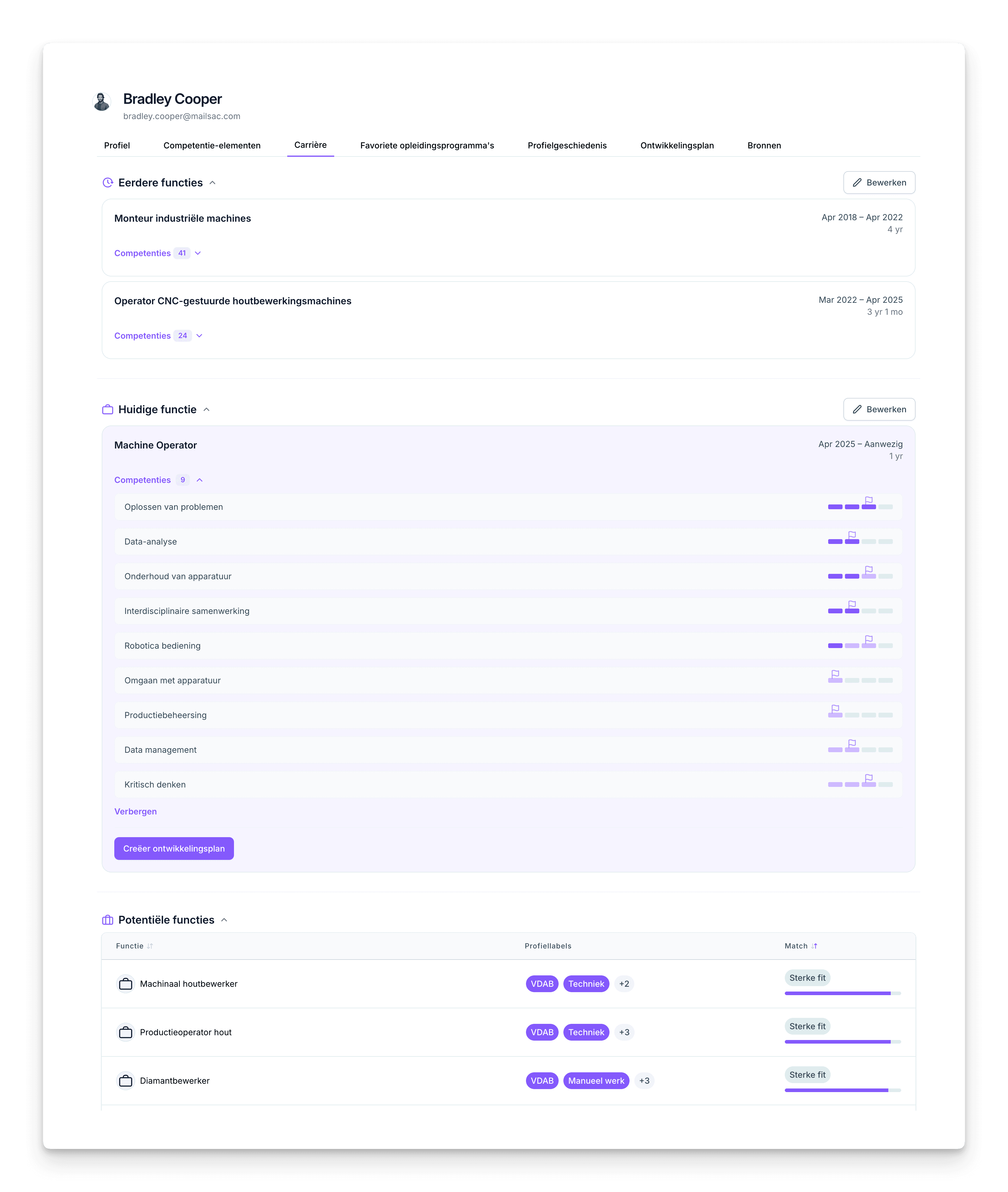
We've introduced a new career view for all employees in talentguide. It distinguishes between current, past and potential next roles.
Each role sits in a timeline, with the right context and the right skills attached.
What are the advantages?
1. You see the full picture - Not just where someone is today, but how they got there, including all the skills and skill improvements they gained along the way.
2. Development talks grounded in a shared view - Only when you understand how someone fits their current job, you can have personal development conversations based on a shared view.
3. Internal mobility gets transparant - Employees get insight and transparency in what could be next steps in their careers and what's needed to get there.
How the Career view works
The flow is intentionally straightforward.
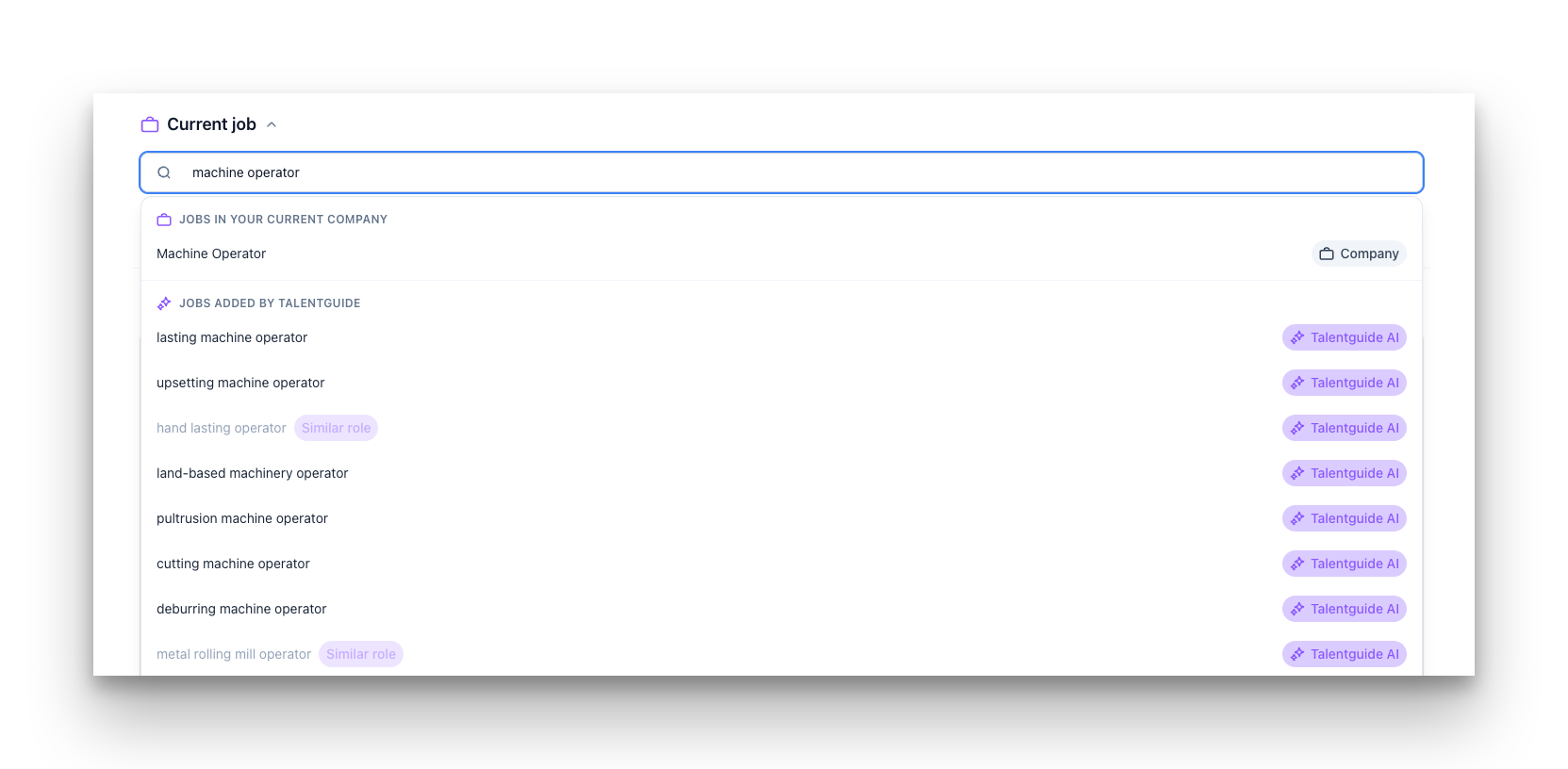
1. Add data, we extract the skills
Start with what already exists. Upload a CV or any document. Talentguide extracts: skills, expertise levels, relevant experience...
No CV available? Select a role from your company’s function house or use the Talentguide library. No manual setup. No blank starting point.
2. Career matches are calculated
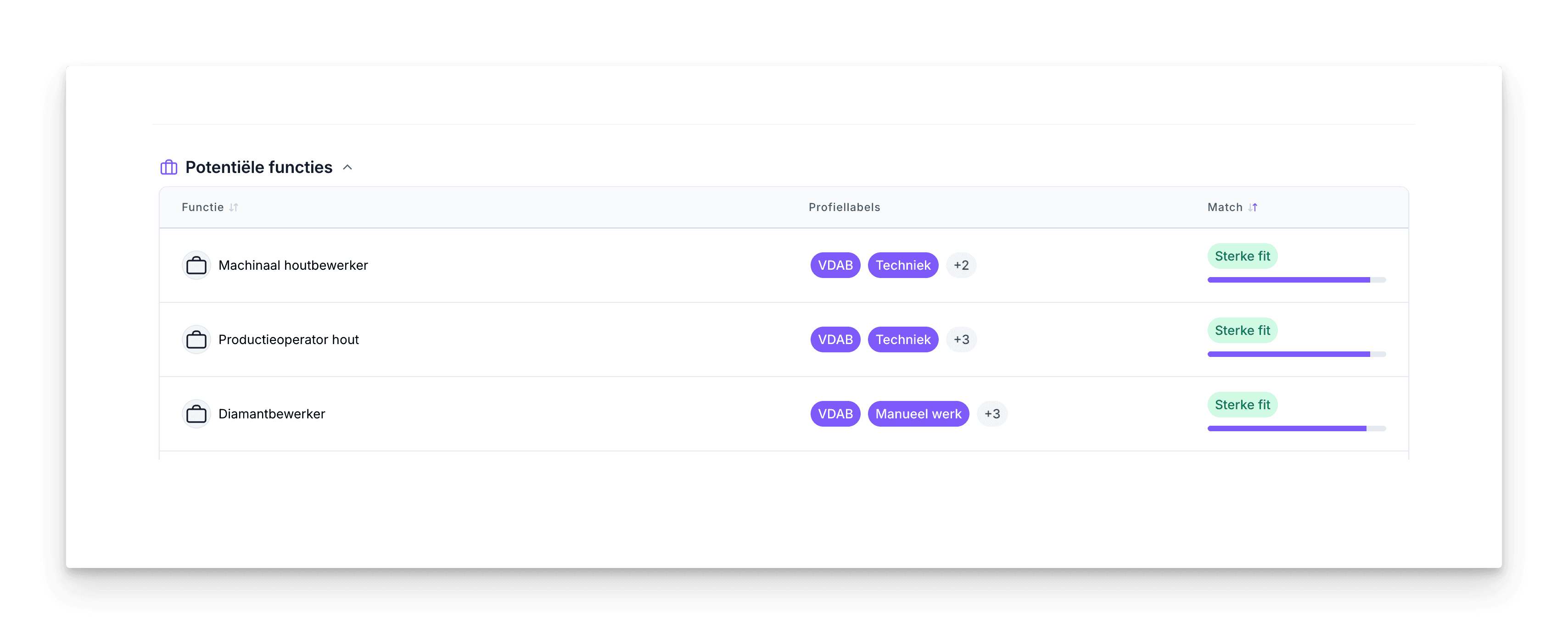
With a structured skill profile in place, the system evaluates:
Fit with the current role
Gaps in capability
Best matching roles across the organization
Employees don’t get a vague “next step”.
They see concrete, achievable transitions based on what they can actually do.
Career paths are now available in Talentguide
Personal Career paths are now live in talentguide.
Book your trial to see how talentguide can help your organization to develop talent faster.
Start planning your workforce better
Free trial for up to 5 employees